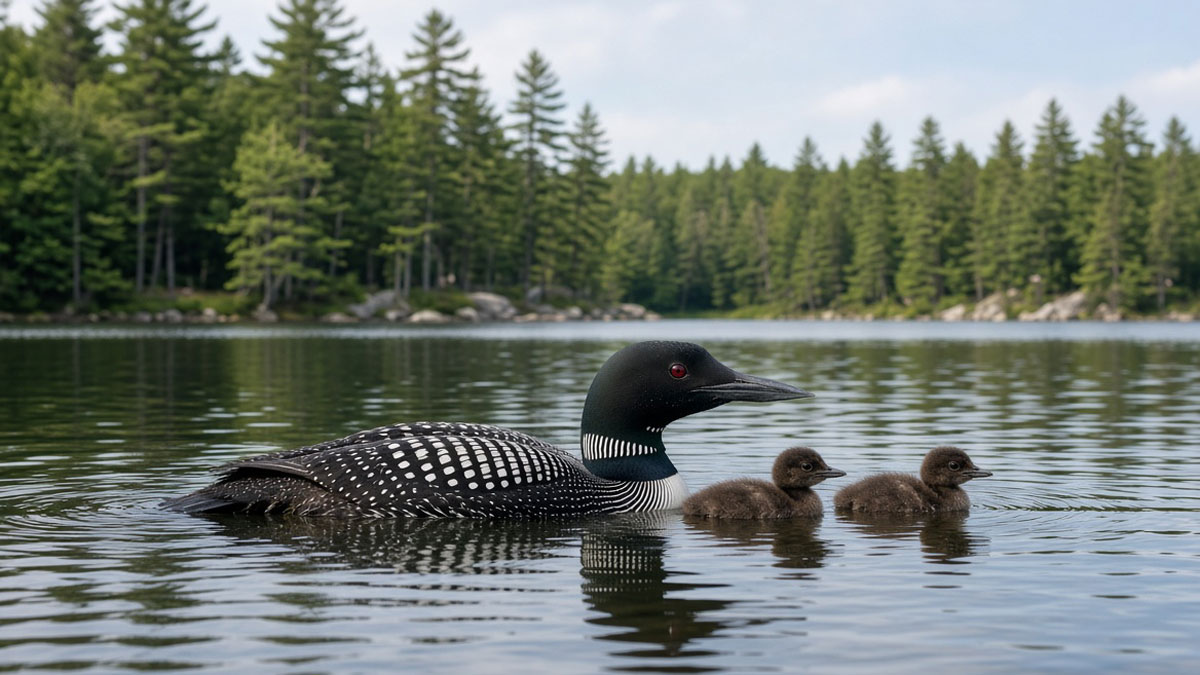
Low water levels on lakes are more than a nuisance for boaters and shoreline owners. They can disrupt entire aquatic ecosystems and place real stress on wildlife, including one of Minnesota’s most iconic birds—the common loon.
Loons nest at the water’s edge because they are powerful swimmers but awkward on land. Their nests are typically placed within inches of the shoreline so adults can slip quickly into the water if threatened. When lake levels drop, those nests become stranded. The growing distance to water exposes eggs to predators, creates physical barriers such as steep banks, and forces parents to leave the nest unattended for longer periods. The result is higher rates of nest failure and abandonment.
Food supply is also affected. Loons hunt by sight underwater, relying on healthy populations of small fish. Prolonged low water can shrink foraging habitat, alter fish communities, and reduce the abundance of prey that chicks need to grow and survive. In severe cases, entire shallow zones that support invertebrates and young fish can dry up, cascading through the food web.
Other wildlife feels the pressure as well. Amphibians lose breeding habitat. Shorebirds and waterfowl find fewer productive feeding areas. Fish that depend on shallow, vegetated zones for spawning and nursery habitat face reduced success. In extreme drought, lakes can shrink dramatically, concentrating pollutants and further degrading conditions for remaining species.
Stable water levels during the critical nesting and chick-rearing season generally support higher reproductive success for loons. Both sharp rises (which flood nests) and sharp declines (which strand them) create problems. Managing lakes to avoid extreme or poorly timed drawdowns helps protect these birds and the broader community of plants and animals that depend on healthy lake ecosystems.
Protecting water levels is not only about recreation or property values—it is about sustaining the wildlife that makes northern lakes distinctive.